
A day’s work, decades of benefit — if your walls have a cavity to fill.
Bonded bead pumped into the cavity, filling it completely.
If your home was built with a cavity wall and that cavity is empty or only partly filled, this is the cheapest meaningful energy upgrade available to you. Bonded bead insulation is pumped into the gap between the inner and outer leaf, filling it completely and stopping the convection that carries heat out of the house.
Small holes are drilled into the mortar joints of the external wall in a set pattern. Insulation bead, coated with a bonding agent, is pumped under pressure until the cavity is full. The holes are then made good with matching mortar.
The bonding agent matters. It sets around each bead so the fill stays put, holds its shape and doesn’t slump down the cavity over time — which is what went wrong with some of the loose-fill and fibre products used decades ago. Most houses are done in a single day, with no internal disruption and no redecorating afterwards.
Not every cavity should be filled. We survey before we quote.
Not every cavity should be filled, and a competent installer will tell you so. We survey first, using borescope inspection where needed, to check:
If the survey says no, we’ll tell you and point you at internal or external insulation instead.
From insulation to heat pumps, ventilation and more. Improve comfort, lower bills and increase your BER rating.
New builds, extensions and deep retrofits, fully managed from design and planning through to construction and completion.
High-quality solar panel systems for homes, farms and businesses. Lower energy costs and gain energy independence.
Energy upgrades and construction solutions for commercial, agricultural and public sector projects.
There’s a fair amount of bad history attached to this measure, most of it from products and practices that are no longer used. The problems came from unsuitable properties being filled anyway, from materials that absorbed and transmitted water, and from installers who didn’t survey.
The protection against all three is the same: survey properly, fix defects first, use a certified bonded system, and don’t fill a cavity that shouldn’t be filled. We work to SEAI and NSAI standards and our installers are certified on the systems we use.
Filling an empty cavity typically takes a noticeable chunk out of a home’s heat loss for a fraction of the cost of the alternatives. Rooms hold their heat longer, the boiler or heat pump cycles less, and cold north-facing walls stop feeling cold. It’s also the measure that makes other upgrades work harder — insulating the walls before installing a heat pump means a smaller unit running at a lower flow temperature, which is where heat pumps become cheap to run.
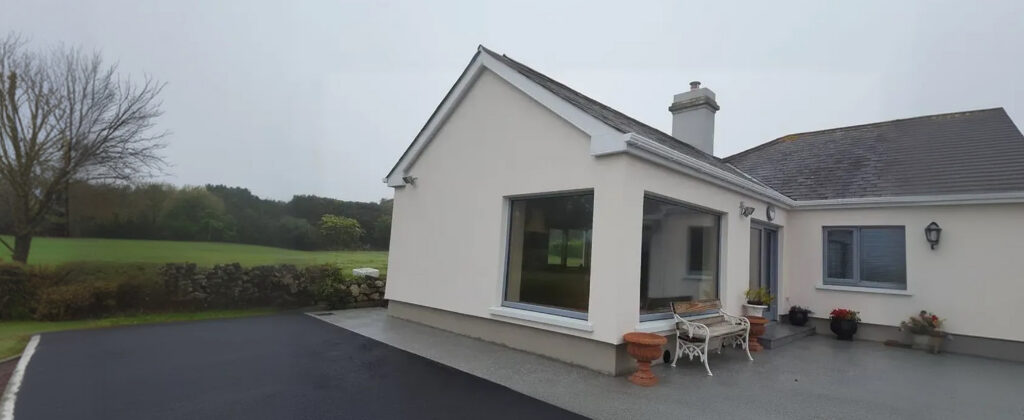
Homes built in Ireland from roughly the 1940s onward usually do. Wall thickness and brick pattern are indicators, but a survey confirms it properly.
Most houses are completed in a day.
They’re made good with colour-matched mortar. On a rendered wall they disappear entirely; on exposed brick or block they’re visible on close inspection.
Not when the wall is sound and the system is correctly installed. Damp problems arise when a cavity with existing water ingress is filled without fixing the cause. That’s what the survey is for.
Possibly not. Older fibre and loose-fill materials can settle or become saturated. We can inspect and advise on removal and refill.
Call 051 850722 for a free survey. If your walls aren’t suitable we’ll tell you, and point you at the measure that is.