One project, many buildings, and a level of support none of them would reach alone.
Homes, clubs, schools and businesses upgraded under a single application.
The Community Energy Grant supports energy upgrades across groups of buildings rather than one at a time. A single project can bring together homes, community facilities, sports clubs, schools and local businesses under one application.
The logic is scale. Aggregating buildings into one project makes the technical and administrative overhead worth carrying, gets better value from contractors, and typically unlocks a stronger level of support than the same buildings applying individually.
Projects are led by a project coordinator who assembles the buildings, develops the technical case, manages the application and delivers the works. That coordination is the hard part, and it’s where most community projects stall before they start.
The mix is set by what the surveys find, not decided in advance.
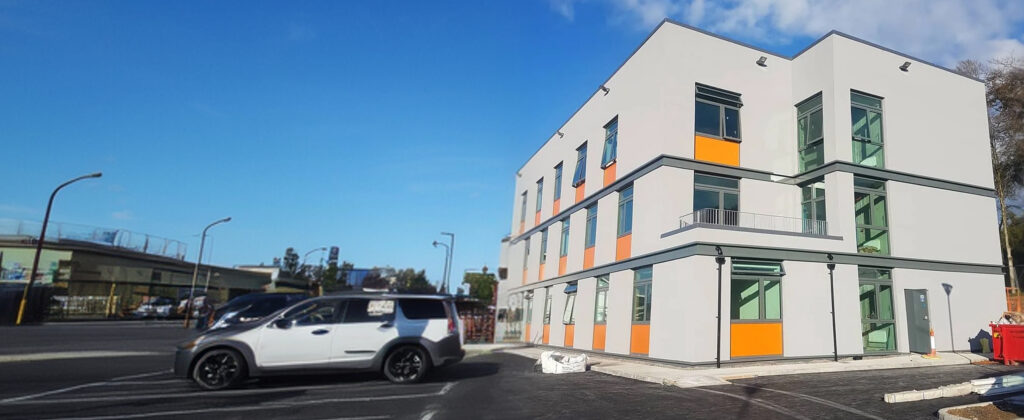
A typical community project mixes building types:
Measures span the full range: insulation, heating upgrades, heat pumps, lighting, controls, solar PV and building fabric works. The mix is set by what the surveys find across the portfolio, not decided in advance.
From insulation to heat pumps, ventilation and more. Improve comfort, lower bills and increase your BER rating.
New builds, extensions and deep retrofits, fully managed from design and planning through to construction and completion.
High-quality solar panel systems for homes, farms and businesses. Lower energy costs and gain energy independence.
Energy upgrades and construction solutions for commercial, agricultural and public sector projects.
Community projects run on timelines set by grant calls, and the preparation is front-loaded. Buildings have to be identified and surveyed, owners signed up, a technical case built and costs established — all before an application goes anywhere.
ENCON works on community energy projects across the South East and nationally, both as the delivery contractor and alongside project coordinators. We handle surveys, technical specification, costing and the works themselves, and we’re used to the reporting and verification these projects carry.
If you’re a community group, a sports club, a school or a local authority thinking about this, the useful first step is a conversation about which buildings you could realistically pull together. Call 051 850722 and we’ll give you a straight assessment of whether there’s a project there.
No — the scheme is built around aggregated projects across multiple buildings. A single building should look at individual grants or the non-domestic schemes instead.
It depends on the project structure and the household. Some homes are fully funded; others contribute. This is set out during project development.
Energy agencies, community groups, local authorities and experienced contractors all take on the role. It carries real responsibility for the application and delivery.
Longer than people expect. Development and application typically run for months before works begin, and delivery follows the grant call timeline.
Call 051 850722. We’ll give you a straight assessment of whether there’s a viable project in the buildings you have.