Upgrade your home with energy-efficient construction, deep retrofit, and passive house expertise delivered by certified specialists who manage every detail.
Ready to lower your energy bills and create a warmer home? Call now to speak with a specialist or fill out the form to check your SEAI grant eligibility.
Turnkey Residential Services
We provide a full turnkey service for homeowners from structure and fabric upgrades to energy systems and final finishes. You move in. We handle everything else.
Passive House Explained
Passive Houses are designed using PHPP software, allowing performance to be tested and optimised before construction begins.
Passive houses require significantly less energy for heating and cooling, reducing running costs year after year.
Stable indoor temperatures with no cold spots or draughts, regardless of external weather conditions.
Continuous fresh air circulation removes pollutants and moisture, improving indoor air quality.
Built to exceed current regulations, passive houses protect against rising energy costs and future standards.
How It Works
Improve thermal performance and reduce heat loss through walls, roofs, and floors.
Low-carbon heating solutions for offices, industrial units, and mixed-use buildings.
Infrastructure improvements & LED lighting to support modern energy systems.
How It Works
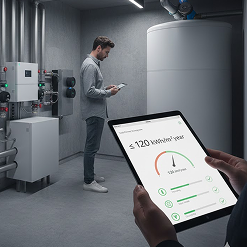
Achieving these metrics ensures superior comfort and efficiency.
Homes stay warm with very little energy, delivering consistent comfort throughout the winter months.
Heating, hot water, and electricity use are tightly controlled to reduce running costs and emissions.
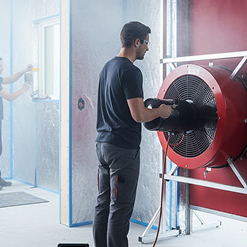
Airtight construction eliminates draughts and heat loss while supporting efficient ventilation.
Smart design and insulation maintain comfortable temperatures without active cooling systems.
Whether you’re planning a new build, a deep retrofit, or simply exploring your options, our team is here to help you make informed decisions with confidence.
Energy Efficiency
On average, Irish houses require 9,722 kWh of energy for space heating purposes per year, resulting in 2,855kg of CO² emitted into the atmosphere. A house meeting Passive house standard typically requires as little as 1,500 kWh of energy per year to meet space heating requirements.
The reduction in energy demand results in a drastic cut to the carbon dioxide released into the environment to 176kg per year and a significant savings on energy bills. The heating cost for a 150m² house would be in the range of €100 per year should it meet passive house standards.
Measured. Verified. Trusted.
The updated TGD Part L 2019 sets out requirements for dwellings that undergo major renovation. Major renovations are considered when more than 25% of the building’s surface area (the building envelope) undergoes refurbishment or renovation. The TGD states that the performance of entire building should be improved to a cost-optimal level where technically, functionally and economically feasible. The cost optimal performance level is considered 125 kWh/m²/yr when calculated in DEAP.
To calculate the surface area, the entire external envelope needs to be considered. This includes the external walls, floors, roof, windows, doors etc. TGD Part L 2019 defines the envelope as the surface area of the building “through which it can lose heat to the external environment or the ground, including all heat loss areas of walls, windows, floors and roof”.
To calculate the percentage that would trigger a major renovation, take the building element and divide by the total surface area (of the building fabric). For external walls, we would divide 150m2/386m², giving us a percentage of 39% of the surface area. This means external insulation or internal wall dry lining upgrades would be considered a major renovation as more than 25% of the surface area will undergo refurbishment. The cost optimal level of 125 kWh/m²/yr requirement means that this dwelling would need to achieve an equivalent BER rating of B3 where it is technically, functionally and economically feasible to meet the updated requirements of Part L 2019 – Existing Buildings.

Measured. Verified. Trusted.
Major renovations include cladding the external surface of the wall or dry lining the internal surface of a wall. Painting, re-plastering, re-slating or re-tiling are not considered to be major renovations. In addition, attic insulation installed at ceiling level between the joists and installation of cavity wall insulation are not considered to be a “major renovation to the surface area”.
Part L does not consider it to be technically, functionally or economically feasible to bring the entire building to cost optimal level when replacing the surface area of roofs, floors or windows. In addition, historic buildings (of architectural or historical interest) should aim for improvements to the building that are “reasonably practical”, i.e. the works should not harm the character or increase risk of long-term deterioration of the building fabric or fittings.
Dwellings that are damaged due to natural disasters (floor, fire, etc.) or a material defect are also exempt as it is not considered economically feasible to bring these renovations to a cost optimal level.
For both new build and retrofit, Part L defines the requirements as buildings being designed and constructed to limit the amount of energy required for operation (energy performance) and its associated carbon emissions (CO2) as is reasonably practicable.
For new build this includes:
Meeting Part L 2019 for existing builds is much the same as new builds, however, includes the following additions:
Care should be taken to avoid thermal bridging around common junctions, including windows, doors, wall openings, at junctions between elements to name a few. The DEAP methodology considers heat loss from thermal bridges when calculating energy use and CO2 emissions. In any case, thermal bridging should not pose a risk of either surface or interstitial condensation.
Advanced Building Methods
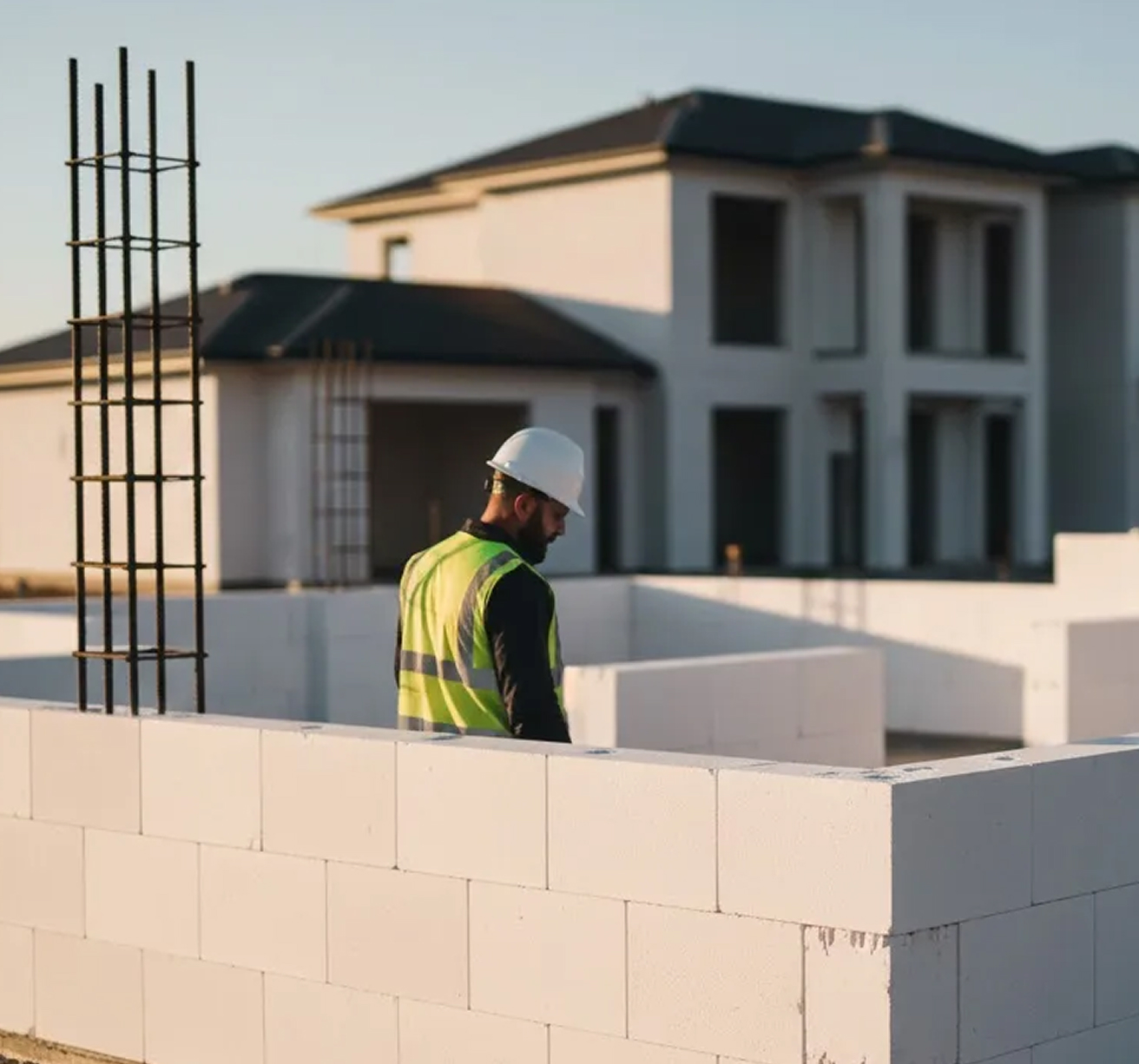
ICFs consist of high-density polystyrene panels 1200mm long, 400mm high, and 65mm wide, spaced apart by high strength polypropylene webs. The forms provide a fully insulating, permanent shuttering system into which concrete is poured.
Once cast, the solid concrete core not only provides the necessary structural integrity for the building, but also excellent sound insulation, fire safety, thermal mass and durability for the structure’s lifetime.
The polystyrene panels of each block provide the thermal insulation to the structure, with U-values between 0.24 W/m2K and 0.13 W/m2K being easily achievable.
The forms, being extremely light (only 3.5 kg each), are simple and easy to build, with all of the attendant handling and safety benefits. So, if you’re looking to construct bespoke new builds, then let ICF be the solution for your construction needs.
Advanced Building Methods
Amvic ICF is the strongest insulating concrete formwork system on the market.
There are many benefits that ICF can bring to your architectural new homes project. Simplicity & convenience is just a few to mention.
The powerful combination of the patented, reversible FormLockT interlock, EPS composition, innovative web design and web spacing result in:
Therefore, ICF is a must when it comes to any new project that relates to architectural new homes.
ICF walls can be finished internally by gypsum board screwed directly to the integral webs.
A wide range of external finishes may be used including brick, stone, timber cladding, and renders. ‘Through-coloured’ polymer renders are the most popular form of render finish, a wide variety of colours and textures being available.
As can be seen, ICF is indeed a very cost-efficient solution for bespoke new builds and architectural new homes. Contact us today to find out more information.